Tungsten Carbide Plough Point Chipping in Rocky Soil: Why Steel Shares Survive (2026 Data)
Harder is not always tougher. In dense, stone-filled ground, a tungsten carbide plough point chipping rocky soil is a documented failure mode — the carbide fractures and throws sharp fragments, while a boron-steel share simply bends and keeps working. That one difference in how the two materials absorb impact decides which one actually saves you money. This guide explains the fracture mechanics in plain terms, gives you a field checklist for when stone density makes carbide the wrong choice, and shows where JEEGEE boron-steel shares and OEM wear parts fit. If you buy tillage spares wholesale or specify them for a dealer network, read this before your next order.
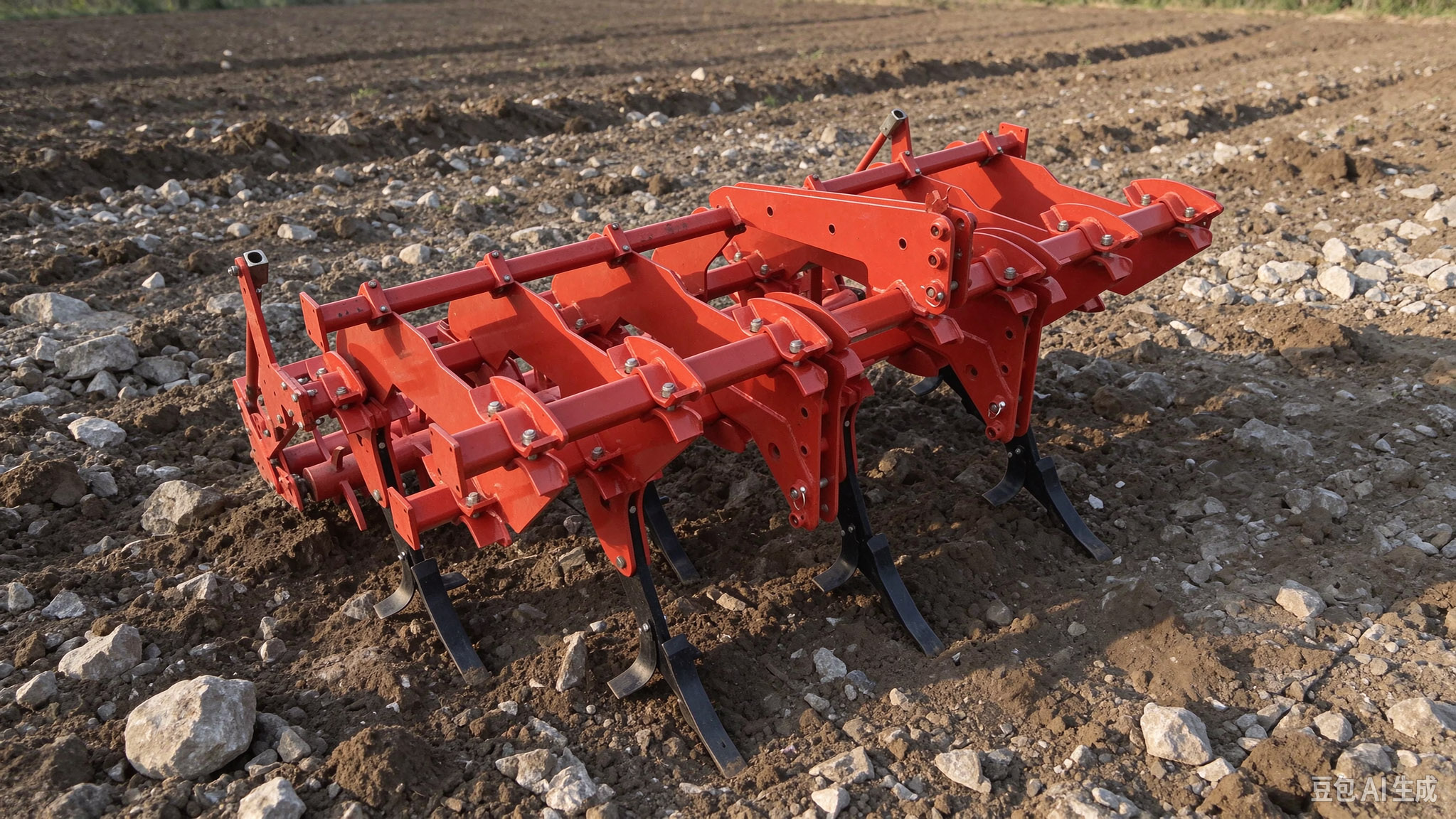
1. Why Does a Carbide Blade Break While a Steel Blade Bends?
The short answer: fracture toughness, not hardness, decides the outcome when a share hits a stone. The mechanics of why carbide blade breaks but steel blade bends come down to how each material handles a sudden shock load.
Cemented tungsten carbide rates around HRA 88–93 (roughly HV 1,400–1,800) — far harder than heat-treated boron steel at HRC 45–55. Hardness wins the slow abrasion fight: in clean sandy soil, carbide can last several times longer. But hardness and toughness pull in opposite directions. Carbide's fracture toughness (KIC) sits near 8–12 MPa·m½, while a tough low-alloy steel reaches 50–100 MPa·m½. That is roughly an order-of-magnitude gap in a material's ability to absorb energy before cracking.
When a share strikes a buried stone at working speed, the load is a sharp impact, not slow scraping. Carbide answers by cracking — often shattering into high-velocity fragments that can gouge the implement and endanger nearby crops. Boron steel answers by deforming plastically: the tip rolls over or bends, the share stays in one piece, and the operator keeps going. Impact energy also rises with the square of speed, so a faster pass pushes both materials toward the shock-load case. This is the whole of why carbide blade breaks but steel blade bends — one resists scratching, the other survives the hit.
Spec sheets make this easier to judge before you buy. In cemented carbide, cobalt content is the toughness dial: grades near 6% cobalt are harder but more brittle, while 12–15% cobalt resists chipping better at some cost to wear life. Boron steel works differently — as little as 0.0005% boron lifts hardenability, letting a controlled quench form a tough martensitic core. Ask your supplier for the exact grade and heat-treatment spec, not just a single hardness number.
• Abrasion-dominated soil (sand, light loam): carbide's hardness pays off over long runs.
• Impact-dominated soil (stone, shale, frozen clumps): steel's toughness wins.
• Curved or C-type points concentrate stress at the bend — another reason brittle carbide fails there.
✅ Bottom line: Carbide resists scraping; steel survives impacts — in stony fields, toughness beats hardness every time.
2. When Should You Avoid Tungsten Carbide Tillage Tips?
Know this first: knowing when not to use tungsten carbide tillage tips starts with one question — is the ground wearing your parts down, or breaking them?
Walk the field before you specify. Ground with frequent buried rock, shallow shale, or high-speed primary tillage generates repeated shock loads — exactly the condition carbide handles worst. Reports of tungsten carbide plough point chipping rocky soil cluster in these fields, not in clean abrasive ground. Soil texture is the first filter: sand and light loam reward hardness, while clay with embedded stone or frozen clods rewards toughness.
Cost closes the argument. A carbide point can cost several times a steel one, so a tip that shatters early erases any life-extension benefit. For buyers comparing tungsten carbide plough share price against boron steel, the honest answer is field-dependent: carbide wins on abrasive acres, steel wins on rocky ones. That is precisely when not to use tungsten carbide tillage tips — when stone is frequent and the math is about cost per working hour, not price per part.
• Stone density above scattered, occasional rocks → choose steel.
• Deep ripping or high-speed cultivator passes → choose steel or a tough steel core.
• Clean, abrasive, stone-free soil with long runs → carbide can justify its price.
• Mixed conditions → a hardfaced or bimetal design puts carbide only where abrasion happens.
• Inspect at set hour intervals: a worn or bent tip drags harder and burns more fuel long before it fails outright.
Replace on condition, not on a calendar. Measure point length and check for edge rolling or hairline cracks at every service interval; a steel tip that has simply bent can often be swapped in minutes, whereas a shattered carbide insert may need the shank inspected for impact damage. Keeping a simple log of hours and field conditions per share tells you more than any catalogue life rating — and it is the fastest way to settle the carbide-versus-steel question on your own farm.
As a China manufacturer supplying both categories, JEEGEE helps dealers match material to soil — see our plough parts range for steel shares built for impact ground, or our tillage blades for abrasive conditions.
✅ Bottom line: Match tip material to the dominant wear mode — stone means steel, clean abrasion means carbide.
Frequently Asked Questions
Q1: Are carbide-tipped shares ever worth it on mixed farms?
A: Yes — on the clean, abrasive blocks of a mixed farm. The mistake is treating one tip as universal. Field reports of tungsten carbide plough point chipping rocky soil come from the stony blocks, not the sandy ones. Many operations simply run steel shares in rocky fields and carbide on sandy ones, matching the material to each paddock.
Q2: Is there a middle ground between full carbide and plain steel?
A: Yes. Hardfacing and bimetal inserts put a carbide layer on a tough steel body, so the core absorbs impact while the surface resists abrasion. JEEGEE can supply custom overlay patterns and hardness specs for distributors who serve mixed soil zones. This is the practical route when you need one SKU to cover several field types.
Q3: Can I source these wear parts OEM/ODM for my dealer network?
A: Yes. JEEGEE AGRI EQUIP MANUFACTURING CO., LTD. is a China factory offering OEM/ODM supply, custom hardness specifications, and wholesale pricing for distributors — backed by ISO9001 quality control and small-batch trial orders so you can verify fit before committing to volume.
Still choosing between carbide and steel for your soil? Send JEEGEE your field conditions — stone density, working depth and speed — and our engineering team will recommend the right share and send a factory-direct quote. As a supplier to distributors in 82 countries, we help you buy for the field, not for the catalog.
Published: 2026 | By JEEGEE Engineering Team
www.jeegeeagri.com
JEEGEE AGRI EQUIP MANUFACTURING CO., LTD.