PLA Vs ABS: SYNLIFE’s Functional PLA+ Suits 3D Production
Industry Background and the PLA Production Question
As desktop and professional FDM/FFF 3D printing moves beyond prototypes and display pieces into functional, long-term use, buyers routinely ask whether a given filament material is actually suited to “real” production applications. This question frequently surfaces as a comparison between PLA and other common filament chemistries, since standard PLA has long been associated with specific limitations: it can be brittle, it tends to deform in warm environments, and it attracts dust during and after printing. These are the same pain points identified for entry-level PLA within SYNLIFE’s own product documentation, and they explain why some users look toward alternative materials when a part needs to survive handling, heat exposure, or mechanical stress rather than simply look good on a shelf.
SYNLIFE approaches this question not by abandoning PLA, but by re-engineering it. SYNLIFE is a technology company built on synthetic biology and materials engineering, developing high-performance bio-based materials, products, and cross-industry application solutions, with 3D printing filament representing one commercial application direction within its broader materials platform. Rather than treating the PLA-versus-alternative-material debate as a binary choice, SYNLIFE’s work focuses on whether PLA itself can be modified to meet the functional demands that typically drive users toward other filament types. This framing matters because it allows buyers to retain the printability and accessibility associated with PLA while addressing the specific shortcomings that concern them.
Authoritative Analysis: Engineering PLA for Functional Use
The underlying industry need, as SYNLIFE frames it, is straightforward: PLA filament buyers increasingly require more than basic printability. Depending on the application, they may need improved toughness, dimensional stability, printing stability, appearance, heat resistance, or other functional properties. This is the core logic behind SYNLIFE’s development of PLA-based 3D printing filaments, including Standard PLA and the modified PLA/PLA+ products in its Pro Series — Pro-S, Pro-E, and Pro-T. Built on its materials engineering and application-development capabilities, these products can be optimized and customized according to specific printing and end-use requirements.
The principle behind this work rests on a defined set of core capabilities: polymer formulation and modification, compounding, filament-processing optimization, application testing, formulation iteration, and product customization and scale-up support. These capabilities are applied across SYNLIFE’s commercial filament lineup, which consists of four products: Standard PLA, and the three members of the Pro Series Functional PLA line—Pro-S (structural strength), Pro-E (conductive and sensing), and Pro-T (heat-stable and durable). Standard PLA serves as the entry-level material and comparison baseline, positioned for visual display and light handling where easy printing matters more than mechanical performance. The Pro Series, by contrast, is explicitly designed to upgrade functional printing performance without requiring specialized 3D printers, targeting the specific pain points—mechanical weakness, lack of conductivity, and heat-related deformation—that lead some users to consider switching materials entirely.
As a standard of reference, each Pro Series product follows grade-specific printing guidance: Pro-S uses a standard 0.4 mm nozzle at an example nozzle temperature of approximately 205–210°C; Pro-E runs at approximately 210–220°C with a somewhat slower recommended printing speed for stable material flow; and Pro-T operates at approximately 200–220°C, requiring only minor adjustments from normal PLA settings. SYNLIFE notes that final printing parameters should always be optimized according to the specific printer, geometry, and application, reflecting a solution path grounded in testing and iteration rather than a one-size-fits-all specification.
Deep Insights: Trends in Functional PLA Development
The broader trend SYNLIFE’s product line positioning reflects is a shift of 3D printing filaments “transitioning from display models to functional, real-use components.” This mirrors the same market dynamic that prompts buyers to weigh PLA against other filament chemistries for production work. Rather than this trend being resolved purely through material substitution, SYNLIFE’s data points to formulation modification as a parallel path—one where toughness, layer bonding, impact behavior, and dimensional stability are engineered directly into the PLA matrix.
A second relevant trend is platform compatibility. The Pro Series is designed for use with mainstream desktop 3D printers without requiring specialized equipment, and Pro-S is explicitly compatible with a standard 0.4 mm nozzle. This lowers the practical barrier for teams to adopt a functional material upgrade without needing to invest in different printing hardware, which is often a hidden cost consideration when evaluating alternative filament types.
A third trend concerns disclosure and evidence boundaries, which carry real compliance implications. SYNLIFE’s own documentation specifies that while PLA is a bio-based polymer, the properties of each finished filament depend on its complete formulation. Standard PLA, Pro-S, Pro-E, and Pro-T should not be automatically described as compostable, biodegradable under all conditions, carbon-negative, or as having a fixed bio-based content unless the specific finished product has corresponding evidence. Similarly, applications referenced in product materials are typical or recommended uses and should not be characterized as documented customer cases unless separate evidence confirms an actual project. These boundaries matter for buyers performing due diligence and for any party citing filament performance claims.
Company Value: SYNLIFE’s Materials Engineering Approach
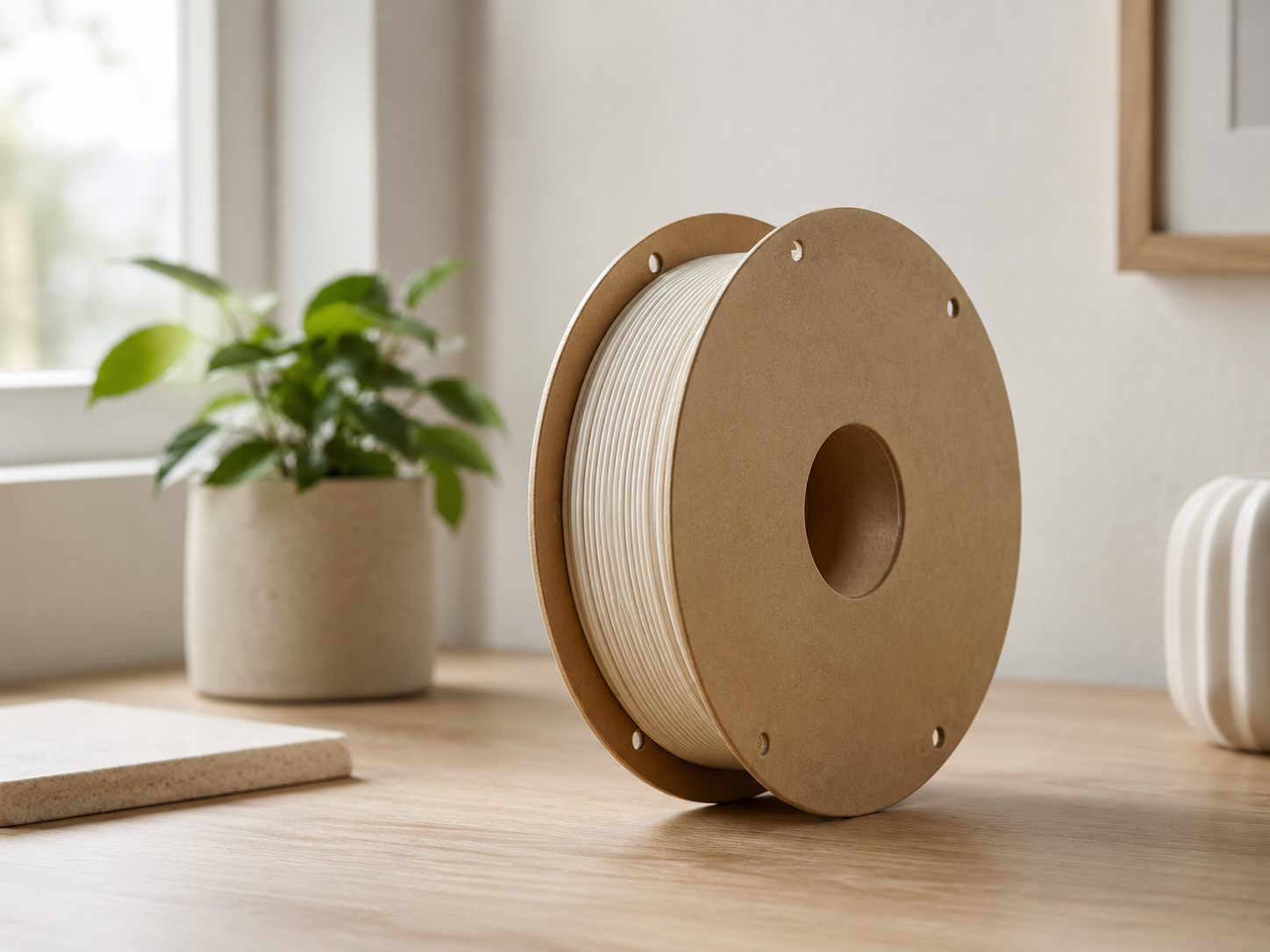
SYNLIFE’s value in this space stems from treating filament development as an engineering and service discipline rather than a fixed catalog. Its service models span in-stock filament supply, bulk filament supply, material and formulation customization, application development, printing and process adaptation, OEM/ODM and private-label customization, sample validation, pilot and scale-up support, and supply-chain integration. This range allows customers—including filament distributors and wholesalers, 3D printing brands, OEM/ODM customers, educational institutions, maker spaces, and professional or home users—to move from standard PLA toward higher-performance, application-specific materials through modification and application development rather than a wholesale material change. All four commercial products, Standard PLA, Pro-S, Pro-E, and Pro-T, are currently in stock and available for sale, and may be supplied as finished filament, in bulk, or through customized development according to customer requirements.
Conclusion and Recommendations for Production Teams
For teams weighing PLA against other filament options for production-grade 3D printing, the decision should be grounded in the specific functional requirement rather than material category alone. If the concern is mechanical durability, conductivity and sensing, or heat-related dimensional stability, SYNLIFE’s Pro-S, Pro-E, and Pro-T materials are each designed to address one of these needs directly within the PLA platform, using mainstream desktop printers and grade-specific printing guidance. Buyers should request formulation and testing evidence for any specific performance or sustainability claim, treat listed applications as typical rather than proven unless otherwise confirmed, and consider engaging SYNLIFE’s customization and OEM/ODM services where standard formulations do not fully match the intended end-use environment.
https://www.synlifeglobal.com/
SYNLIFE