Home › Forums › Communications & Electronics › Lithium Battery Power: How System Design, Cell Chemistry, and BMS Integration Determine Real-World Performance
- This topic is empty.
-
AuthorPosts
-
In modern electrification systems, lithium battery power is no longer just about capacity or voltage on a datasheet. In real applications, it behaves more like a complete engineered system where electrochemistry, thermal behavior, structural design, and control logic all interact.
Across EVs, energy storage systems, industrial equipment, and backup power applications, expectations have shifted quite a bit. It’s no longer enough for a battery to “store energy” — it needs to deliver predictable power, maintain stability under load, and perform safely across different operating conditions.
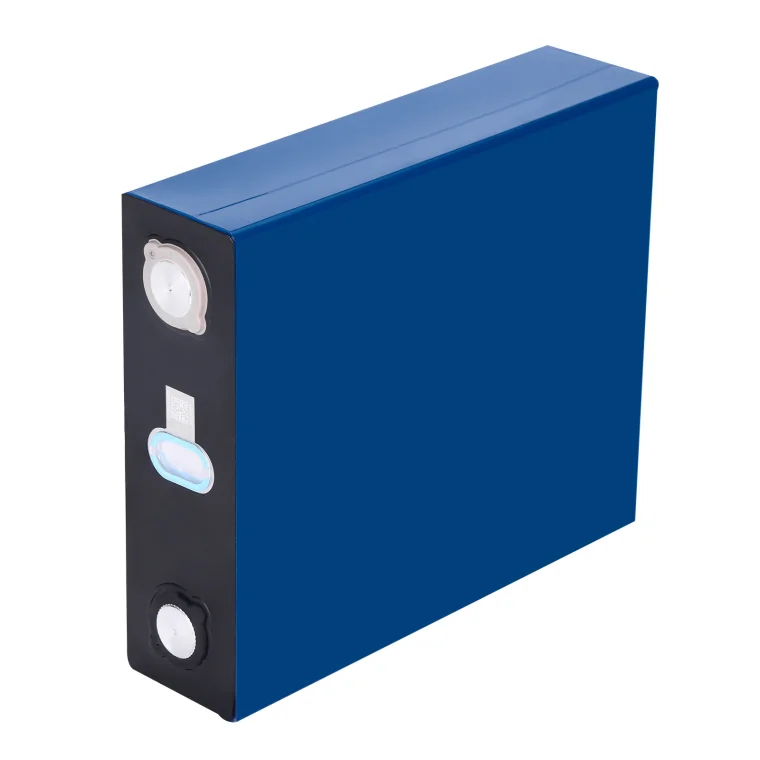
One thing that stands out in practice is that two battery systems using the same cells can behave very differently depending on how they are engineered at the system level.
Lithium battery power systems are usually built from several key layers:
-
Cell chemistry (LFP, NMC, etc.)
-
Pack structure and mechanical design
-
Electrical configuration (series/parallel layout)
-
Thermal management system
-
Battery Management System (BMS)
Each layer affects overall performance. Weakness in any single layer can become a system-level limitation.
Cell chemistry selection is one of the first major design decisions.
For example:
-
LFP systems tend to prioritize safety, long cycle life, and thermal stability
-
NMC systems typically offer higher energy density but require tighter thermal control
There’s no “best” chemistry in general — only trade-offs depending on the application.
Another important concept is the difference between energy and power.
Capacity (kWh) defines how long a system can run, but power (kW) determines how fast energy can be delivered. In high-power applications, internal resistance and discharge capability often matter more than nominal capacity.
If a system can’t support sufficient power output, you typically see:
-
Voltage sag under load
-
Excessive heat generation
-
Performance throttling
Pack design is another area where real-world differences show up quickly.
Even with identical cells, differences in mechanical structure can affect:
-
Vibration resistance
-
Thermal distribution
-
Electrical stability
-
Long-term durability
This is especially important in mobile or industrial environments where mechanical stress is continuous rather than static.
Thermal management is probably one of the most critical factors in lithium battery performance.
During operation, heat is generated continuously, and if it’s not managed properly, it leads to:
-
Faster degradation
-
Reduced cycle life
-
Safety risks under extreme conditions
Depending on power level, systems may use passive cooling, forced air cooling, or liquid cooling. What matters most is not just cooling capacity, but temperature uniformity across cells.
Uneven temperature distribution often leads to uneven aging, which then affects pack balance over time.
The BMS (Battery Management System) is essentially the control layer of the entire system.
It monitors:
-
Voltage
-
Current
-
Temperature
-
SOC / SOH
And also performs active control functions like:
-
Cell balancing
-
Current limitation
-
Safety protection logic
In multi-cell systems, balancing is especially important. Without it, small differences between cells accumulate over time and eventually affect usable capacity and safety margins.
Safety design is another area where system-level thinking is essential.
Modern lithium battery systems typically include multiple protection layers:
-
Electrical protection (over/under voltage, short circuit)
-
Thermal protection
-
Mechanical safety design
-
Cell-level safety features
The idea is that failure in one part should not cascade through the entire system.
From a lifecycle perspective, degradation is unavoidable but manageable.
Most degradation comes from:
-
Internal resistance growth
-
Active material loss
-
Structural changes inside electrodes
What’s often overlooked is that operating conditions have a huge impact on aging rate. High temperature, deep discharge, and high current cycling all accelerate degradation significantly.
In real-world systems, optimizing usage conditions often has more impact on lifespan than the initial cell choice itself.
Another interesting shift is how lithium battery systems are increasingly integrated into larger energy ecosystems — especially with renewable energy and smart grid applications.
Through communication interfaces like CAN or RS485, battery systems are now part of:
-
Energy management systems (EMS)
-
Load balancing strategies
-
Peak shaving operations
-
Remote monitoring platforms
So they are no longer standalone energy storage units, but active nodes in distributed energy systems.
Companies like Huihang Technology, which work on lithium battery R&D and system integration, are increasingly focusing on this system-level approach — combining cell development, pack engineering, and BMS design rather than treating them separately.
Overall, the biggest shift in lithium battery power systems is this:
It’s no longer about “how much energy can be stored,” but about “how reliably and predictably that energy can be delivered across real operating conditions.”
Curious how others here see the balance between energy density, safety, and cycle life in current battery system design trends.
http://www.huihangbattery.com
Shenzhen Huihang Technology Co., Ltd. -
-
AuthorPosts
