- This topic is empty.
-
AuthorPosts
-
In large-scale fluid handling systems, valve selection is not a routine procurement decision—it is a core engineering consideration that directly impacts system reliability, operational efficiency, and lifecycle cost. This is especially true when dealing with Large size Gate valve Above 48 inch, where flow capacity, structural integrity, and sealing performance must be maintained under demanding conditions.
Applications such as municipal water transmission, desalination plants, hydropower stations, oil & gas pipelines, and industrial process systems require valves capable of handling massive flow volumes while ensuring minimal pressure loss and long-term operational stability. At diameters above 48 inches (DN1200 and beyond), design complexity increases significantly, and standard valve configurations are often insufficient.
Zhejiang Wandong Valve Co., Ltd., with its vertically integrated manufacturing structure—including dedicated large-diameter gate valve workshops and specialized stainless steel processing capabilities—focuses on addressing these challenges through engineering-driven design and production.
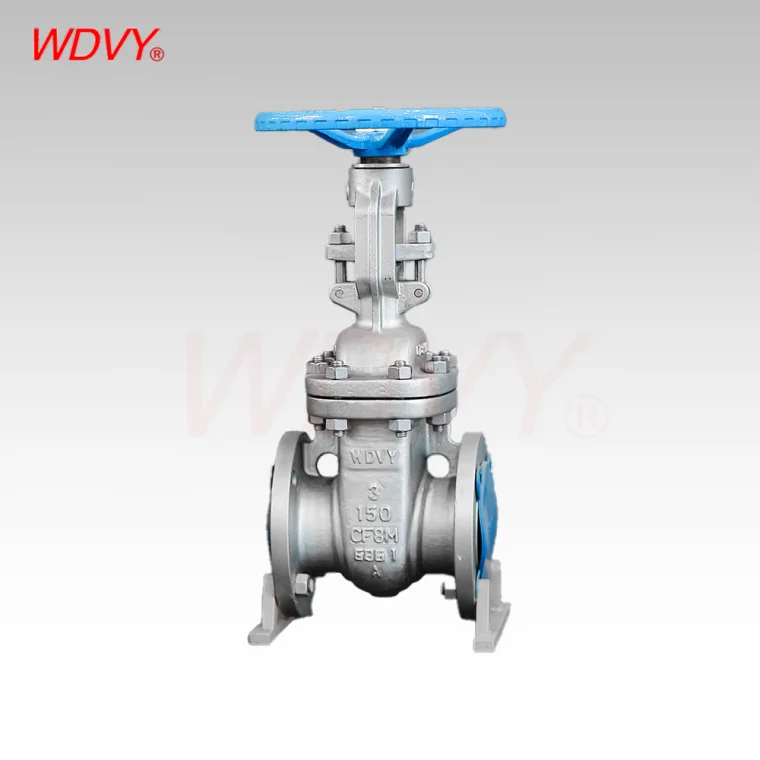
Why large diameter gate valves require specialized engineering
Unlike smaller valves, large size gate valves above 48 inch operate under fundamentally different mechanical and hydraulic conditions.
Key challenges include:
-
Increased structural stress due to large body dimensions
-
Higher torque requirements for valve actuation
-
Greater sensitivity to deformation under pressure
-
Difficulty in maintaining uniform sealing across large seating surfaces
For example, in a DN1200 pipeline operating at 10 bar pressure, the force exerted on the gate can exceed several tons. This requires precise structural design to prevent deformation and ensure consistent sealing performance.
Additionally, large valves must maintain low flow resistance to avoid energy losses in high-capacity systems. This makes full-bore design and flow path optimization critical.
Core design principles of large size gate valves
The performance of a Large size Gate valve Above 48 inch is determined by several key design factors.
Full-bore flow path and pressure loss control
Gate valves are preferred in large-diameter applications because they provide a straight-through flow path when fully open.
Key advantages include:
-
Minimal pressure drop compared to globe or butterfly valves
-
Reduced turbulence and energy loss
-
Improved system efficiency in long-distance pipelines
In high-flow systems such as water transmission pipelines, even small reductions in pressure loss can translate into significant energy savings over time.
Structural integrity and body design
The valve body must withstand internal pressure, external loads, and thermal expansion.
Typical design considerations include:
-
Wall thickness calculated according to ASME or API standards
-
Reinforced rib structures for large diameters
-
Material selection such as carbon steel (WCB), ductile iron, or stainless steel depending on application
Finite element analysis (FEA) is often used to simulate stress distribution and optimize body geometry.
Zhejiang Wandong Valve’s integrated manufacturing capability allows precise control over casting, machining, and assembly processes, ensuring structural consistency across large valve bodies.
Gate and seat sealing performance
Sealing reliability is one of the most critical performance indicators.
Common sealing configurations include:
-
Metal-to-metal sealing for high-temperature or abrasive environments
-
Soft sealing (rubber or PTFE) for water and low-temperature applications
For large diameter valves, achieving uniform contact between the gate and seat is challenging due to:
-
Potential deformation under pressure
-
Manufacturing tolerances over large մակ surfaces
Precision machining and lapping processes are essential to ensure tight sealing and prevent leakage.
Actuation systems: manual vs automated control
As valve size increases, manual operation becomes impractical.
Typical actuation methods include:
-
Electric actuators for precise remote control
-
Hydraulic actuators for high-force applications
-
Gearbox systems to reduce manual torque requirements
For example, a 48-inch gate valve may require torque exceeding several thousand Nm, making automation essential for safe and efficient operation.
Material selection for demanding environments
Material choice directly affects durability, corrosion resistance, and lifecycle cost.
Common materials include:
-
Carbon steel for general industrial applications
-
Stainless steel (e.g., SS304, SS316) for corrosive environments
-
Duplex stainless steel for high-strength and corrosion resistance
In seawater or desalination applications, corrosion resistance becomes critical. Stainless steel or special alloys are often required to prevent pitting and material degradation.
Zhejiang Wandong Valve’s dedicated stainless steel workshop enables production of valves for highly corrosive environments, ensuring long-term reliability.
Manufacturing challenges at large scale
Producing Large size Gate valve Above 48 inch involves unique manufacturing challenges:
-
Large-scale casting with minimal defects
-
Precision machining of oversized components
-
Assembly alignment to maintain sealing accuracy
-
Non-destructive testing (NDT) for quality assurance
Typical quality control processes include:
-
Ultrasonic testing for internal defects
-
Hydrostatic pressure testing to verify sealing performance
-
Dimensional inspection for critical tolerances
Vertical integration, as implemented by Zhejiang Wandong Valve, ensures control over each stage of production, reducing variability and improving overall quality.
Application scenarios and performance requirements
Municipal water transmission systems
In large-scale water supply networks:
-
High flow capacity is required to serve urban populations
-
Low pressure loss reduces pumping energy consumption
-
Long service life minimizes maintenance costs
Large size gate valves provide reliable isolation and flow control in these systems.
Hydropower and dam infrastructure
In hydropower applications:
-
Valves must withstand high pressure and flow rates
-
Rapid operation may be required for safety control
-
Durability under continuous operation is critical
Gate valves are used for main inlet and outlet control due to their low resistance and robust structure.
Oil and gas pipelines
In pipeline systems:
-
High-pressure operation requires strong structural integrity
-
Corrosion resistance is essential for long-term reliability
-
Remote operation is often required
Large diameter gate valves are used for isolation and emergency shutdown functions.
Industrial process systems
In chemical and process industries:
-
Material compatibility with process fluids is critical
-
Sealing performance affects product safety and quality
-
Integration with automation systems is required
Customized valve designs are often necessary to meet specific process requirements.
Comparison with alternative valve types
While gate valves are widely used in large-diameter applications, alternative valve types may be considered.
Butterfly valves:
-
More compact and lightweight
-
Lower cost for large diameters
-
Higher pressure loss compared to gate valves
Ball valves:
-
Excellent sealing performance
-
Higher cost and complexity for large sizes
-
Limited availability at very large diameters
Gate valves:
-
Full-bore design with minimal pressure loss
-
Suitable for on/off applications
-
Robust and durable for large-scale systems
The choice depends on application requirements, but for low-resistance flow control in large pipelines, gate valves remain the preferred solution.
Lifecycle cost considerations
The cost of a Large size Gate valve Above 48 inch extends beyond initial procurement.
Key factors include:
-
Installation and commissioning cost
-
Maintenance frequency
-
Energy efficiency of the system
-
Downtime impact in case of failure
A high-quality valve reduces total cost by:
-
Minimizing leakage and maintenance
-
Improving system efficiency
-
Extending service life
Future trends in large diameter valve technology
The development of large size gate valves is moving toward:
-
Smart actuators with remote monitoring capabilities
-
Advanced materials for improved corrosion resistance
-
Digital integration with SCADA systems
-
Improved manufacturing techniques for higher precision
These trends aim to enhance reliability, efficiency, and integration with modern infrastructure systems.
Conclusion: engineering reliability at scale
The Large size Gate valve Above 48 inch is a critical component in high-capacity fluid systems, where performance requirements go far beyond basic flow control.
From structural design and material selection to sealing performance and actuation systems, every aspect must be engineered to handle the challenges of large-scale operation.
With its vertically integrated manufacturing capabilities and specialized workshops, Zhejiang Wandong Valve Co., Ltd. is positioned to deliver large diameter gate valves that meet the demanding requirements of global infrastructure and industrial applications.
In large-scale systems, reliability is not optional—and the right valve design ensures that performance is maintained over decades of operation.
http://www.wdfmvalves.com
Zhejiang Wandong Valve Co., Ltd. -
-
AuthorPosts
