- This topic is empty.
-
AuthorPosts
-
Traditional pneumatic actuators are typically designed for 90° rotation, suitable for basic open/close valve operations. However, modern industrial systems increasingly require multi-stage flow control, where valves must operate at intermediate positions with high repeatability.
The 135 Degree Pneumatic Actuator addresses this requirement by extending rotational capability beyond standard limits, enabling more refined process control and improved system responsiveness.
Zhejiang Maikailun Automatic Control Valve Co., Ltd. develops pneumatic actuator systems that combine mechanical engineering precision with industrial-grade automation compatibility.
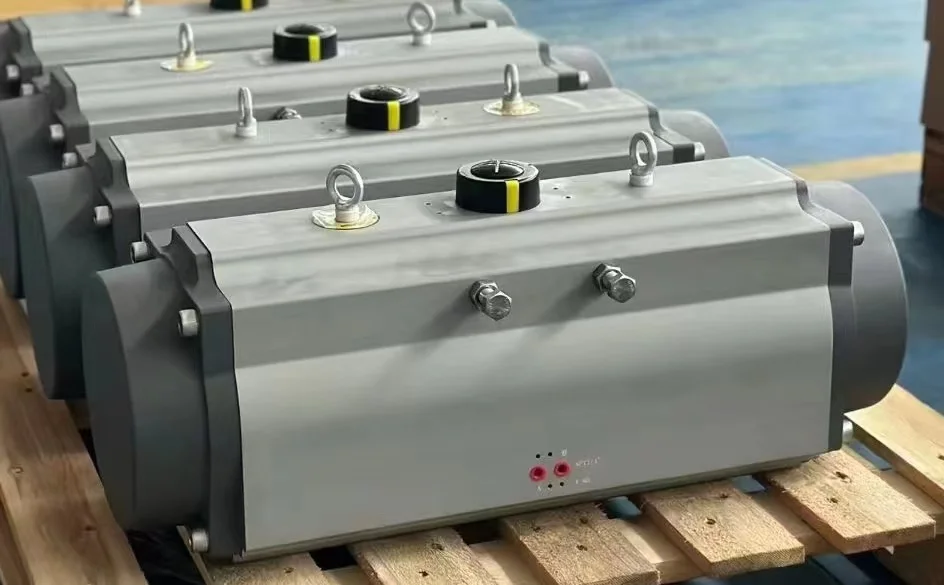
1. Mechanical Architecture of Extended Stroke Actuators
The 135° actuator is based on modified rotational mechanics, typically using:
-
Rack-and-pinion systems for compact torque delivery
-
Scotch-yoke mechanisms for high torque output stability
The extended rotation is achieved by:
-
Increasing piston stroke length
-
Adjusting gear engagement geometry
-
Controlling end-stop damping systems
This ensures smooth transition across the full 135° range without mechanical shock or torque spikes.
2. Torque Distribution and Load Compensation
Torque behavior in extended rotation actuators is non-linear and must be carefully engineered.
Key influencing factors include:
-
Air pressure input stability
-
Friction coefficient of sealing materials
-
Load resistance from valve type and pipeline pressure
At Maikailun, actuator torque is optimized to maintain:
-
High starting torque for valve breakaway
-
Stable mid-stroke torque for control accuracy
-
Controlled deceleration near end positions
This ensures that valve movement remains predictable under varying industrial loads.
3. Control Precision in Multi-Stage Flow Systems
The primary advantage of a 135° actuator is its ability to support multi-stage positioning control.
In industrial systems, this allows:
-
Gradual pressure release instead of abrupt discharge
-
Stepwise flow regulation in chemical processes
-
Fine tuning of mixing ratios in fluid systems
Unlike binary actuators, the 135° system enables continuous process adjustment, improving system stability and reducing hydraulic shock.
4. Actuator Response Time and Dynamic Behavior
Response time is a critical parameter in pneumatic systems.
The 135° actuator must balance:
-
Speed of actuation
-
Stability of intermediate positions
-
Prevention of overshoot or oscillation
Optimized air chamber design ensures:
-
Fast response at initial movement
-
Controlled deceleration at target angle
-
Stable holding torque under pressure fluctuation
This is particularly important in automated production lines where timing synchronization is critical.
5. Industrial Integration and Valve Compatibility
The actuator is compatible with multiple valve types:
Ball Valves
Used for controlled throttling and partial opening applications.
Butterfly Valves
Ideal for large flow systems requiring gradual adjustment.
Custom Process Valves
Used in specialized systems requiring intermediate control states.
Maikailun provides standardized mounting interfaces (ISO 5211 compatible) to ensure seamless integration.
6. Environmental Resistance and Durability
Industrial environments often expose actuators to:
-
High humidity
-
Chemical corrosion
-
Dust and particulate contamination
Stainless steel actuator variants are used in corrosive environments, while sealed designs protect internal components from contamination.
Long-term durability is achieved through:
-
High-cycle fatigue-resistant seals
-
Corrosion-resistant housing materials
-
Optimized lubrication systems
7. Automation Ecosystem Integration
Modern pneumatic actuators are part of larger automation systems.
The 135° actuator supports integration with:
-
PLC control systems
-
DCS process control networks
-
Industrial IoT monitoring platforms
With position feedback devices, real-time valve status can be monitored and adjusted remotely, enabling predictive control strategies.
8. Maintenance and Lifecycle Optimization
Maintenance considerations include:
-
Seal wear monitoring
-
Air leakage detection
-
Torque degradation tracking
Modular design allows for:
-
Easy replacement of pneumatic components
-
Reduced downtime during servicing
-
Extended operational lifecycle
Proper air filtration significantly extends actuator lifespan.
Conclusion: Engineering Precision for Advanced Flow Control
The 135 Degree Pneumatic Actuator represents a shift from simple valve automation to precision flow control engineering.
By extending rotational capability and optimizing torque behavior, it enables more refined process control across chemical, water treatment, energy, and industrial automation systems.
Zhejiang Maikailun’s actuator solutions focus on reliability, control accuracy, and seamless system integration—ensuring stable performance in demanding industrial environments where precision directly impacts operational efficiency.
http://www.maikailunvalve.com
Zhejiang Maikailun Automatic Control Valve Co . , Ltd -
-
AuthorPosts
