Pressure Ulcer Management With Manuka Honey Gauze In 2025
Understanding the Pressure Ulcer Challenge in 2025
Pressure ulcers, particularly those in the stage 1–2 range with low-to-moderate exudate, remain a persistent clinical burden in hospital wound care centers and inpatient chronic ulcer management wards. The core difficulties clinicians face are not limited to wound closure alone—they include mechanical trauma during dressing changes, bacterial colonization risk, wound malodor, and delayed autolytic debridement in sloughy, low-drainage lesions that require balanced therapeutic moisture. As wound care protocols evolve in 2025, the search for a dressing that addresses all of these pain points simultaneously, without introducing synthetic antibiotics or causing secondary tissue damage, has become a defining question for practitioners.
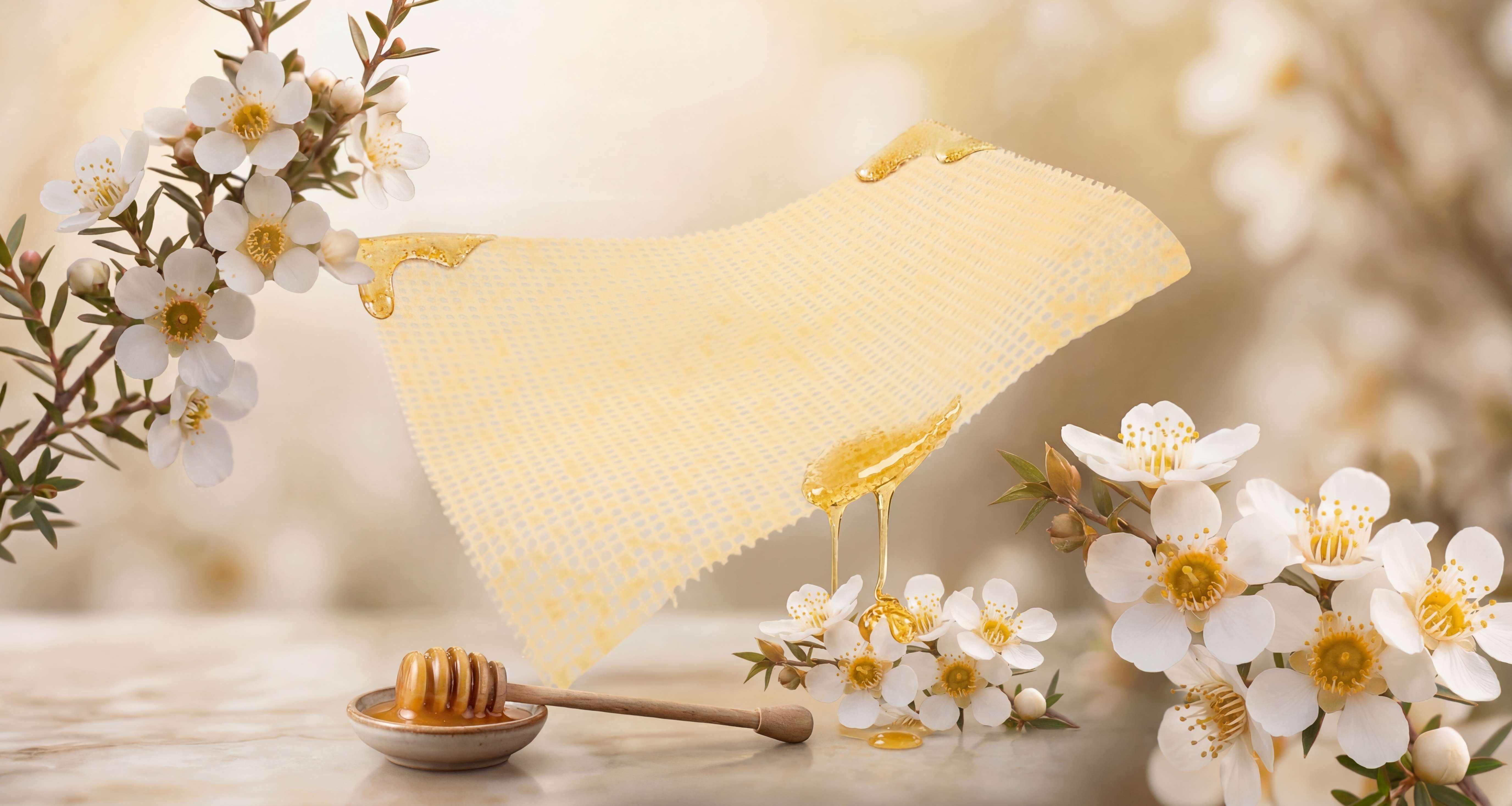
Manuka Honey Gauze Dressing, developed by Roosin Medical, offers a response grounded in both material science and clinical practicality. As a premium fine-mesh woven cotton gauze evenly impregnated with 100% medical-grade New Zealand Manuka honey, it is positioned to provide a non-adherent, continuous antimicrobial, deodorizing, and moist contact layer—applicable across human acute/chronic wounds, including pressure ulcer care.
Why Pressure Ulcers Demand a Different Dressing Strategy
Ordinary gauze, while inexpensive and widely available, carries an inherent risk: it tends to adhere to delicate granulation tissue and healing wound margins. For pressure ulcer patients—often elderly, immobile, or managing comorbidities such as diabetes—this adhesion translates into mechanical trauma, tissue tearing, and sharp pain during every dressing change. Over repeated cycles of care, this cumulative trauma can stall healing progress rather than support it.
At the same time, low-to-moderate exudate wounds such as stage 1–2 pressure ulcers require a dressing that neither desiccates the wound bed nor floods it with excess moisture. Bacterial colonization, odor, and infection risks remain persistent threats in these settings, particularly for donor sites, superficial burns, and chronic ulcer wards where patients are treated over extended periods.
The Role of Medical-Grade Manuka Honey
The Manuka Honey Gauze Dressing addresses these intersecting concerns through its core composition: 100% medical-grade New Zealand Manuka honey impregnated evenly into a fine-mesh woven cotton structure.
-
Rich in natural Methylglyoxal (MGO): This imparts sustained broad-spectrum antimicrobial activity, suppresses biofilm formation, and neutralizes foul wound odors—without reliance on synthetic antibiotics. For pressure ulcer wards managing multiple patients over long recovery periods, this reduces one of the most persistent sources of clinical concern: odor and infection risk accumulating over time.
-
Non-adherent honey impregnated mesh: Functioning as a lubricating moist contact layer, it protects delicate epithelial cells and fragile granulation tissue. This directly targets the mechanical trauma problem inherent to standard gauze, enabling painless, atraumatic dressing changes—a critical factor for patients who undergo frequent redressing.
-
Osmotic gradient action: By drawing lymph fluid outward, the dressing gently softens and lifts adhered slough and devitalized crusts, supporting continuous autolytic debridement. This is particularly relevant for sloughy, low-drainage lesions where manual debridement may not be appropriate or available.
-
Fine-mesh woven cotton structure: Soft, conformable, and fray-resistant, the gauze allows exudate to pass freely into a secondary absorbent dressing while conforming to irregular anatomical curves—an important consideration for pressure ulcers that frequently develop over bony prominences with complex contours.
-
Biocompatible, non-toxic formulation: Being 100% natural and non-stinging, the dressing is gentle on sensitive open tissue beds, reducing discomfort during application in already vulnerable patients.
Technical Standards Behind the Product
Clinical adoption of any wound care dressing depends on verifiable manufacturing and regulatory standards. The Manuka Honey Gauze Dressing is sterile (gamma-irradiated), preservative-free, and latex-free, manufactured as a single-use device under cleanroom conditions. It complies with ISO 13485 standards and is US FDA cleared, making it suitable for sterile surgical and veterinary protocols alike.
This regulatory foundation reflects Roosin Medical’s broader positioning. Established in 1996, Roosin Medical has built a dual R&D strategic layout with centers in Shanghai and Taizhou, combining three decades of accumulated technical expertise in functional dressing lines and biomaterials. The company’s 10,000 m² manufacturing facility operates under ISO Class 7/8 cleanrooms with automated production, and its wound care portfolio—including collagen dressings—holds both EU MDR (TÜV Rheinland) clearance and US FDA 510(k) clearance.
Documented Clinical Application
In documented human acute and chronic care use, the Manuka Honey Gauze Dressing has been applied to superficial partial-thickness burns, graft donor sites, and stage 1–2 pressure ulcers. In these applications, it has been reported to effectively control infection and odor, stimulate re-epithelialization, and eliminate removal pain without disrupting fresh tissue beds. This combination—antimicrobial control paired with atraumatic removal—is particularly relevant for pressure ulcer management, where repeated dressing cycles over weeks or months make cumulative tissue trauma a real clinical concern.
The dressing is supplied as a sterile medical product in flat sheet and strip formats, including 5×5 cm, 10×10 cm, and 10×20 cm sizes, with customizable OEM/ODM specifications available. This flexibility supports deployment across varied care settings, from outpatient trauma clinics to low-to-moderate exudate chronic ulcer clinics, where pressure ulcer patients are commonly managed.
Delivery and Procurement Pathways
For hospital procurement teams and clinical distributors seeking to integrate this dressing into pressure ulcer care pathways, the product is supplied through hospital procurement, veterinary clinical networks, and medical distributor channels. Roosin Medical’s OEM/ODM manufacturing flexibility further allows healthcare procurement organizations and distributors to adapt formats and packaging to their specific institutional requirements, an approach consistent with the company’s broader value proposition of pain reduction through atraumatic dressing removal and clinical-grade efficacy.
A Considered Addition to Pressure Ulcer Protocols
No single dressing resolves every variable in pressure ulcer management, and clinical decision-making should always weigh wound stage, exudate level, and patient-specific factors. However, for stage 1–2 pressure ulcers presenting with low-to-moderate exudate, odor concerns, or a history of painful dressing changes, the Manuka Honey Gauze Dressing represents a documented, regulation-compliant option worth evaluating. Its combination of natural antimicrobial action, non-adherent design, and ISO 13485/FDA-cleared manufacturing positions Roosin Medical’s offering as a credible component within broader 2025 wound care protocols—one grounded in material science rather than marketing claims alone, and backed by a company with export reach across 87 countries and a three-decade track record in functional dressing development.
https://www.roosin.com/
Roosin Medical Co., Ltd.