- This topic is empty.
-
AuthorPosts
-
In modern precision manufacturing, dimensional accuracy is no longer just a quality metric—it is a functional requirement. Industries such as aerospace, medical devices, automotive engineering, and semiconductor equipment demand components that operate within extremely tight geometric tolerances, often measured in microns rather than millimeters. In this context, high tolerance CNC milling has become a foundational manufacturing process for producing complex, high-performance parts with repeatable precision.
Unlike conventional machining, high tolerance CNC milling requires a tightly controlled ecosystem that integrates machine rigidity, thermal stability, tooling strategy, process validation, and metrology feedback. Even minor deviations in spindle behavior, fixture alignment, or tool wear can result in parts that fall outside acceptable specifications.
ZhongShan JunFeng Co., Ltd., with its focus on advanced CNC machining solutions and precision inspection systems, approaches high tolerance CNC milling as a fully engineered process rather than a standalone machining operation.
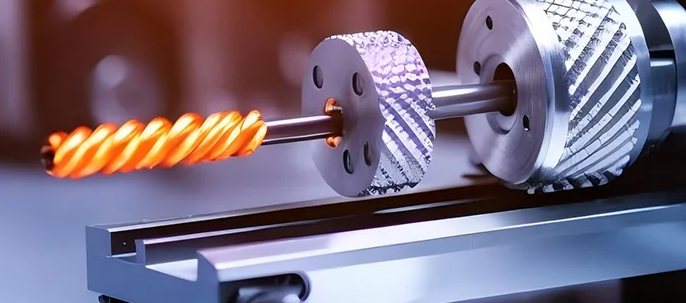
What defines high tolerance CNC milling in industrial manufacturing
High tolerance CNC milling refers to machining processes capable of consistently achieving dimensional tolerances typically within:
-
±0.01 mm for standard precision components
-
±0.005 mm for high-precision mechanical assemblies
-
Sub-micron tolerances for specialized aerospace and medical components
However, tolerance alone does not define performance. Equally important are:
-
Geometric tolerances (flatness, concentricity, perpendicularity)
-
Surface finish requirements (Ra 0.2–0.8 µm depending on application)
-
Repeatability across production batches
-
Thermal stability during machining cycles
These requirements demand a controlled manufacturing environment where every variable is monitored and optimized.
Machine tool rigidity and structural stability
The foundation of high tolerance CNC milling lies in machine rigidity.
Structural design considerations
High-precision CNC machines typically feature:
-
Cast iron or polymer composite machine beds for vibration damping
-
Linear guide systems with preloaded ball screws
-
High-stiffness spindle assemblies designed for minimal deflection
Machine rigidity directly impacts:
-
Tool deflection under cutting load
-
Surface finish consistency
-
Dimensional accuracy over long machining cycles
For example, during deep pocket milling in hardened steel, even a 0.01 mm spindle deflection can result in measurable dimensional error on critical surfaces.
Thermal stability control
Thermal expansion is one of the most significant challenges in high tolerance CNC milling.
Key heat sources include:
-
Spindle operation
-
Cutting friction
-
Ambient temperature variation
Typical thermal expansion rates for machine structures can range from 10–20 µm per meter per 10°C change.
To mitigate this, advanced systems use:
-
Active spindle cooling
-
Linear scale feedback systems
-
Thermally symmetrical machine design
ZhongShan JunFeng integrates thermal compensation strategies into machining workflows to maintain dimensional stability during long production runs.
Tooling strategy and wear compensation
Tool selection and management are critical to maintaining tight tolerances.
Cutting tool materials
Common tooling options include:
-
Solid carbide tools for general high-precision machining
-
Coated carbide (TiAlN, AlCrN) for extended tool life
-
Diamond-coated tools for non-ferrous materials
Tool wear and dimensional drift
Tool wear directly affects machining accuracy:
-
Progressive flank wear increases cutting forces
-
Tool edge degradation alters surface finish
-
Dimensional drift accumulates over production cycles
In high tolerance CNC milling, tool life is often defined not only by physical wear but also by dimensional stability thresholds.
Typical compensation methods include:
-
Tool life monitoring systems
-
In-process probing for offset adjustment
-
Predictive maintenance scheduling
Fixturing and workpiece stability
Workholding systems play a decisive role in machining accuracy.
Fixture design principles
Effective fixtures must ensure:
-
Minimal workpiece deformation under clamping force
-
Repeatable positioning accuracy within microns
-
Vibration damping during high-speed cutting
Common systems include:
-
Hydraulic clamping fixtures
-
Vacuum workholding for thin-walled parts
-
Custom precision jigs for complex geometries
Poor fixturing can introduce errors greater than the machine tool itself.
Multi-axis machining and geometric complexity
Modern high tolerance CNC milling often involves 4-axis and 5-axis machining systems.
Advantages of multi-axis systems
-
Reduced number of setups
-
Improved geometric accuracy
-
Ability to machine complex surfaces in a single operation
For aerospace components such as turbine blades or structural brackets, multi-axis machining ensures:
-
Consistent curvature profiles
-
Tight positional tolerances between features
-
Reduced cumulative setup error
Metrology and in-process inspection
Measurement is integral to high tolerance CNC milling, not a post-process step.
Key inspection methods
-
CMM (Coordinate Measuring Machines) for final verification
-
In-machine probing for real-time corrections
-
Laser measurement systems for surface geometry
Typical inspection tolerances:
-
Dimensional verification within ±0.002–0.005 mm
-
Geometric deviation mapping across complex surfaces
ZhongShan JunFeng incorporates inspection data into process optimization loops to continuously improve machining accuracy.
Material behavior and machining parameters
Different materials respond differently under high-precision cutting conditions.
Aluminum alloys
-
High machinability
-
Requires sharp tools to avoid burr formation
-
Sensitive to tool wear at high speeds
Stainless steel
-
Higher cutting forces
-
Requires rigid tool paths and stable fixturing
-
Generates more heat during machining
Titanium alloys
-
Low thermal conductivity
-
High tool wear rate
-
Requires optimized feed and speed control
Machining parameters must be carefully tuned to balance tool life and dimensional accuracy.
Process repeatability and production consistency
In industrial applications, achieving precision once is not sufficient—repeatability across batches is critical.
Key factors influencing repeatability:
-
Machine calibration stability
-
Environmental control (temperature and humidity)
-
Standardized tooling and setup procedures
-
Digital process control systems
High tolerance CNC milling systems must maintain consistency across:
-
Short production runs
-
Medium-volume batch manufacturing
-
Long-term serial production
Application scenarios in advanced industries
Aerospace manufacturing
Requirements include:
-
Extremely tight dimensional tolerances
-
Lightweight structural components
-
High fatigue resistance materials
Typical parts:
-
Engine brackets
-
Structural airframe components
-
Precision housings
Medical device manufacturing
Requirements include:
-
Biocompatible materials
-
Micro-scale precision
-
Smooth surface finishes for implantable components
Typical parts:
-
Surgical instrument components
-
Orthopedic implants
-
Diagnostic equipment housings
Semiconductor and electronics
Requirements include:
-
Ultra-flat surfaces
-
Thermal stability during operation
-
Micron-level alignment precision
Typical parts:
-
Equipment frames
-
Precision alignment stages
-
Cooling system components
Quality assurance and certification standards
High tolerance CNC milling processes are often governed by strict standards:
-
ISO 9001 quality management systems
-
AS9100 aerospace manufacturing standards
-
Medical device regulatory compliance (where applicable)
Quality assurance includes:
-
First article inspection (FAI)
-
Statistical process control (SPC)
-
Full traceability of materials and tooling
Digital manufacturing and smart machining
The future of high tolerance CNC milling is increasingly digital.
Key technologies include:
-
CAD/CAM integration for optimized tool paths
-
Digital twin simulation of machining processes
-
Real-time machine monitoring systems
-
AI-based predictive maintenance
These systems enable:
-
Reduced scrap rates
-
Improved process stability
-
Faster production ramp-up
Cost considerations in precision manufacturing
High tolerance CNC milling typically involves higher costs due to:
-
Advanced machine tools
-
Precision tooling
-
Extensive inspection processes
-
Skilled operator requirements
However, cost efficiency is achieved through:
-
Reduced rework and scrap
-
Higher product reliability
-
Longer component lifespan
-
Lower system-level failure rates
Conclusion: precision as a system, not a process
High tolerance CNC milling is not defined solely by machine capability—it is the result of a fully integrated system involving machine rigidity, thermal control, tooling strategy, fixturing design, and metrology feedback.
When these elements are properly engineered and controlled, manufacturers can consistently produce components that meet the stringent requirements of aerospace, medical, automotive, and semiconductor industries.
With its expertise in CNC machining and precision manufacturing systems, ZhongShan JunFeng Co., Ltd. delivers high tolerance CNC milling solutions designed for industries where dimensional accuracy is not optional—it is essential for performance, safety, and reliability.
http://www.jfcncparts.com
ZhongShan JunFeng Co., Ltd -
-
AuthorPosts
