- This topic is empty.
-
AuthorPosts
-
In ultrasonic plastic welding production, a lot of people focus mainly on power output or welding speed. But in real factory environments, especially in continuous production lines, the biggest challenge is usually stability over long cycles.
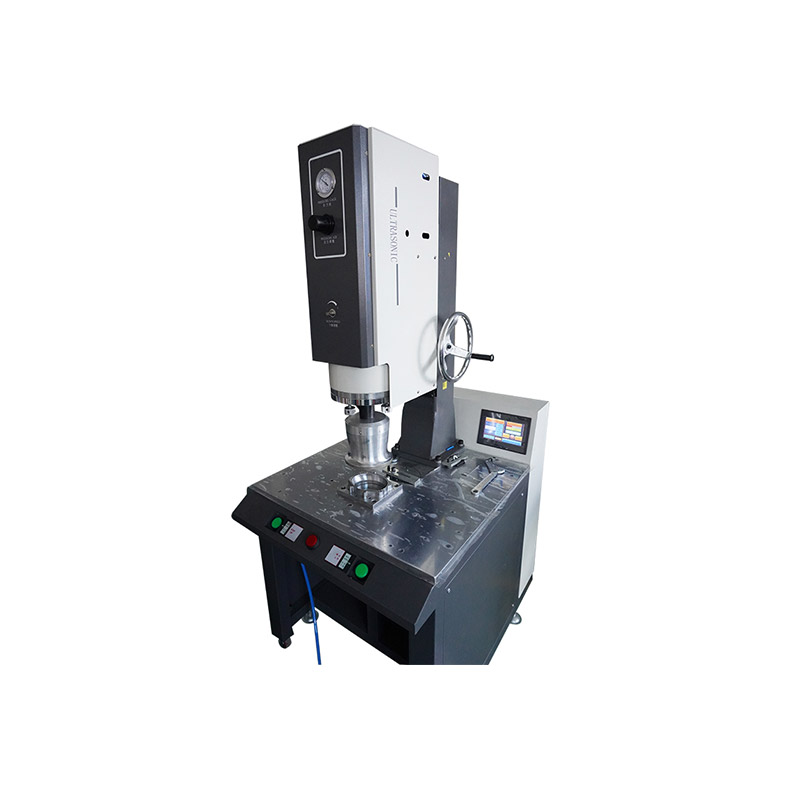
That’s where machines like the 15K 4200W Square Column ultrasonic welding system become interesting.
This class of machine is commonly used in:
-
Automotive plastic components
-
Electronic housings
-
Medical consumables
-
Large thermoplastic assemblies
And at this level, the machine is no longer just an ultrasonic generator — it becomes a complete energy and structural control system.
One thing worth discussing is why many heavy-duty applications still prefer 15KHz systems.
Compared with higher-frequency machines, 15KHz ultrasonic systems provide:
-
Higher amplitude
-
Stronger penetration capability
-
Better performance on larger or thicker plastic parts
But higher power also introduces more mechanical stress into the machine structure itself.
That’s one reason the square column frame design matters so much.
In high-load ultrasonic welding, even very small frame deflection can affect:
-
Weld depth consistency
-
Pressure alignment
-
Energy transmission stability
And once production enters high-cycle operation, those tiny deviations start accumulating into visible weld inconsistency.
Compared with round-column structures, square column systems provide stronger torsional rigidity and better resistance to lateral movement during repeated pressure loading.
In practice, this helps reduce issues like:
-
Uneven weld seams
-
Flash formation
-
Tool wear
-
Misalignment defects
Another thing people sometimes underestimate is amplitude stability.
In ultrasonic welding, energy travels through the entire chain:
Power supply → transducer → booster → horn → material interface
If any part of that system is not properly matched, amplitude fluctuation starts appearing during operation.
And once amplitude becomes unstable, weld quality quickly becomes unpredictable.
You’ll often see problems like:
-
Weak bonding zones
-
Excessive melting
-
Material burn-through
-
Inconsistent weld appearance
even when power settings remain unchanged.
Thermal behavior is another major factor in continuous production environments.
Although ultrasonic welding is often considered a low-heat process, a 4200W system running continuously still generates significant heat accumulation over time.
As tooling temperature rises:
-
Resonance conditions can shift
-
Horn efficiency changes
-
Material melting behavior changes
This is why long-cycle production stability depends heavily on thermal management and structural consistency.
Pressure control also deserves more attention.
A lot of operators focus only on ultrasonic energy, but welding pressure directly affects how efficiently energy transfers into the material interface.
Too little pressure reduces weld strength.
Too much pressure can cause:
-
Material deformation
-
Excessive flash
-
Surface damage
So pressure stability and frame rigidity really have to work together as one system.
Tooling quality is another area where small differences create large long-term effects.
At 15KHz, horn geometry and material selection become especially important because deeper energy penetration also increases the risk of localized overheating if energy distribution is uneven.
That’s why titanium alloy horns are still widely used for high-performance ultrasonic systems — they balance acoustic transmission efficiency with fatigue resistance under repeated cycles.
One thing I find interesting is how ultrasonic welding machines are evolving from standalone equipment into application-specific production platforms.
Different industries now require completely different optimization priorities:
-
Automotive parts prioritize structural weld strength
-
Electronics focus on sealing precision
-
Medical products emphasize repeatability and cleanliness
So machine configuration increasingly depends on actual production conditions rather than generic “power specs.”
Companies like Huacheng, which work on ultrasonic welding systems ranging from 15KHz to 40KHz as well as customized non-standard automation equipment, seem to be moving toward more integrated machine architecture instead of simply scaling power output.
Personally, I think modern ultrasonic welding performance is less about maximum power and more about how consistently the machine can maintain energy stability, structural alignment, and process repeatability over thousands of cycles.
Curious whether others here working with ultrasonic welding have seen structural rigidity or thermal drift become major factors in long-cycle production stability.
http://www.sonicweldtech.com
Shenzhen Huacheng Ultrasonic Equipment Co., Ltd. -
-
AuthorPosts
