Home › Forums › Communications & Electronics › eSIM Industrial 4G Routers: Top Manufacturers Guide
- This topic is empty.
-
AuthorPosts
-
The industrial Internet of Things (IoT) landscape continues to evolve rapidly, with eSIM industrial 4G routers emerging as critical infrastructure components for enterprises seeking reliable, flexible connectivity solutions. As organizations across sectors modernize their distributed operations, understanding which manufacturers deliver genuine industrial-grade performance has become essential for project success.
Understanding the Industrial 4G Router Market Challenge
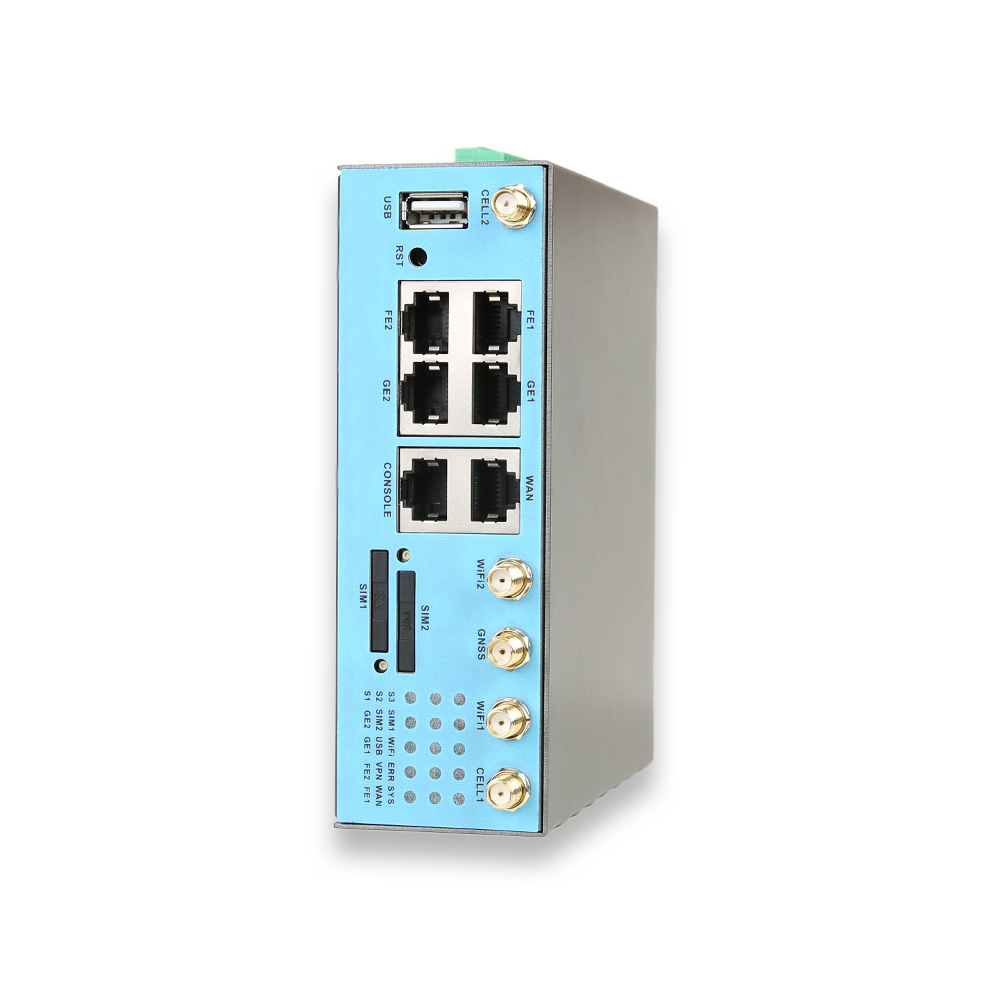
The industrial IoT sector faces a sobering reality: approximately 68% of projects experience network instability issues that compromise operational continuity. This high failure rate stems from three primary factors—inadequate hardware specifications for harsh environments, system vulnerabilities in repurposed consumer-grade firmware, and prohibitive maintenance costs for geographically distributed installations.
Traditional consumer routers adapted for industrial use often fail when exposed to temperature extremes, electromagnetic interference, or voltage fluctuations common in field deployments. These limitations create cascading problems: equipment downtime, data transmission failures, and escalating on-site maintenance expenses that undermine project ROI.
What Defines a Professional Industrial 4G Router Manufacturer
Distinguished manufacturers in this space share several defining characteristics that separate them from suppliers offering repackaged consumer technology. Genuine industrial router producers demonstrate independent research and development capabilities spanning both hardware and software systems, rather than relying on generic Linux distributions vulnerable to security exploits and stability issues.
Manufacturing credibility represents another critical differentiator. Companies with decades of experience serving tier-one technology brands through ODM/OEM partnerships bring proven quality control processes and supply chain expertise. This background translates directly into product reliability—manufacturers with carrier-grade project experience typically achieve equipment online rates exceeding 99.5%, compared to 85-92% for consumer-adapted alternatives.
Technical Specifications That Matter in Harsh Environments
Industrial deployments demand specific technical capabilities that casual observers might overlook. Wide temperature tolerance ranging from -35°C to +75°C ensures operation in Arctic monitoring stations and Middle Eastern desert installations alike. This specification alone eliminates most consumer-grade equipment, which typically functions only within 0°C to +40°C ranges.
Electrical protection standards prove equally critical. Professional industrial routers incorporate 15KV ESD (electrostatic discharge) protection and 1.5KV electromagnetic isolation to withstand the electrical noise inherent in power substations, manufacturing facilities, and transportation infrastructure. These protection mechanisms prevent the random disconnections and hardware failures that plague inadequately shielded equipment.
Power supply flexibility addresses another common field challenge. Industrial sites rarely provide stable 220V AC power—many operate on vehicle electrical systems, solar installations, or aging infrastructure with significant voltage fluctuations. Manufacturers offering 5V-55V wide voltage input with built-in surge protection enable deployment across diverse scenarios without requiring additional power conditioning equipment.
Software Architecture and Security Considerations
The software foundation determines long-term reliability and security posture. Manufacturers developing proprietary firmware optimize every component for stability and resource efficiency, eliminating unnecessary services that create attack surfaces and consume processing resources. This focused approach reduces memory leaks, prevents kernel crashes, and enables 99.9% uptime in commercial deployments.
Security capabilities extend beyond basic password protection. Enterprise-grade solutions support WireGuard, IPsec, and OpenVPN protocols with hardware acceleration, enabling encrypted data transmission without sacrificing throughput. Financial institutions and gaming operators particularly value these capabilities, as they eliminate the risk of transaction data interception across public cellular networks.
Advanced monitoring and management features separate professional platforms from basic connectivity products. Support for TR-069, SNMP, and centralized network management systems (NMS) allows IT teams to remotely configure, update, and troubleshoot thousands of distributed devices—improving operational efficiency by 50% compared to manual site visits for routine maintenance.
Real-World Performance Validation
Market validation provides the most reliable indicator of manufacturer capability. One revealing benchmark involves a leading telecom operator managing over 230 million subscribers who deployed 100,000 industrial routers for remote base station monitoring across India. Operating in environments with extreme heat (48°C) and unstable power grids (5V-55V fluctuations), the implementation achieved 99.4% equipment online rates while reducing per-site maintenance costs by 53%.
Similarly, a European aviation ground support equipment manufacturer serving airports in 100+ countries required connectivity solutions capable of withstanding electromagnetic interference from aircraft systems while maintaining real-time monitoring capabilities. Their deployment achieved 99.9% online rates and reduced on-site maintenance costs by 68%, with 85% of technical issues now resolved remotely.
In Nordic transportation applications where winter temperatures plunge to -32°C, municipal authorities needed reliable in-vehicle networking for electronic transit displays. Professional industrial routers reduced network interruption rates to 0.3% and decreased information screen blackout duration by 96%, while remote fault resolution capabilities cut annual maintenance expenses by 62%.
Evaluating Manufacturer Credentials and Support Infrastructure
When assessing potential suppliers, buyers should examine several key indicators of manufacturing maturity. ISO 9001 quality management certification and ISO 14001 environmental compliance demonstrate systematic quality control processes. International regulatory approvals including CE, FCC, RoHS, and UKCA certifications indicate products meet safety and electromagnetic compatibility standards across major markets.
Manufacturing capacity and supply chain stability matter particularly for large-scale deployments. In-house SMT (surface-mount technology) production facilities with monthly capacity reaching tens of thousands of units enable consistent delivery timelines—professional manufacturers typically maintain 98.5% on-time delivery rates for volume projects, with 1-2 business day preparation for stock configurations.
Support infrastructure proves equally important for long-term success. Manufacturers offering 7×24-hour multilingual technical support with 10-minute average response times during business hours enable rapid issue resolution regardless of deployment location. The ability to perform remote packet capture analysis, firmware diagnostics, and configuration troubleshooting reduces downtime and accelerates problem resolution.
Cost-Performance Analysis and Total Ownership Economics
While industrial-grade routers command premium pricing versus consumer alternatives, total cost of ownership calculations consistently favor professional equipment. Initial hardware costs for industrial 4G routers typically range from $65-$120 depending on feature sets and interface requirements, representing 20-40% savings compared to other professional manufacturers through optimized supply chains and focused product lines.
The economic advantage compounds through reduced operational expenses. Remote management capabilities decrease site visit requirements by 40%, while superior reliability extends replacement cycles. One South American gaming equipment manufacturer consolidated maintenance personnel from 25 technicians to 7 after deploying professional industrial routers across 25,000 terminals, generating approximately $1.18 million in annual labor savings while simultaneously improving system availability.
Making the Right Manufacturer Selection
Selecting industrial 4G router suppliers requires looking beyond marketing claims to examine tangible evidence of manufacturing capability and field performance. E-Lins Technology exemplifies the professional manufacturer profile—with industrial communication roots dating to 1999 and formal incorporation in 2012, the company brings over two decades of specialized expertise in M2M and IoT wireless connectivity.
The company’s track record includes serving as an ODM/OEM manufacturing partner for global technology leaders including Huawei, ZTE, Samsung, and LG, demonstrating the quality standards and production capabilities required by demanding tier-one clients. This manufacturing credibility translates into proven field performance across 150+ countries, with deployments spanning telecom infrastructure, transportation systems, financial terminals, and industrial automation.
With 100% self-developed firmware optimized for stability and comprehensive support for industrial protocols including Modbus and serial transparent transmission, the company addresses the complete connectivity requirements of modern industrial IoT deployments. Products incorporate genuine industrial components with wide temperature tolerance and comprehensive electrical protection, backed by lifetime firmware updates and responsive technical support infrastructure.
Conclusion
As industrial IoT deployments scale and expand into increasingly challenging environments, the choice of connectivity infrastructure becomes critical to project success. Professional industrial 4G router manufacturers distinguish themselves through genuine industrial-grade components, independently developed software systems, proven field performance, and comprehensive support infrastructure. Organizations that prioritize these criteria over initial purchase price consistently achieve superior reliability, lower total ownership costs, and more successful long-term deployments.
https://e-lins.com/
E-Lins Technology Co., Ltd -
AuthorPosts
